Ask this at the end of every lesson, and write down the answer:
"What do I need to do to be prepared for our next lesson?"
Ask questions
Training can feel overwhelming when you're new. Your instructor (and school) should give you an outline of each lesson, but these can be very general. The question above clears it up: what you should work on between lessons, and what to expect next time.
A good instructor will tell you this without being asked, but CFIs are human and are often rushing to their next lesson. Don't let it get missed. Even if you think it was covered, ask again at the end.
And don't let things slide by. If you don't understand something, stop your instructor and go over it until you get it. One of the worst mistakes students make is pretending to understand. Training is a series of building blocks, and a weak block makes everything after it harder.
Get your instructor's phone number on day 1
Your instructor is your main point of contact when you get confused. You'll be able to answer a lot of questions yourself with your study resources, but if you get stuck, stop. Ask your instructor to explain or point you to the answer instead of just moving on.
Or write your question down and bring it to your next lesson. That way your instructor can explain it in person and show you if needed.
Know your flows
You'll get a lot of checklists thrown at you. Practice them until they become "flows": memorized sequences you do by muscle memory. You'll learn what every switch does in time, but get the flows memorized as soon as possible. Once you know where everything is, the rest of training gets so much easier, including later instrument and commercial training.
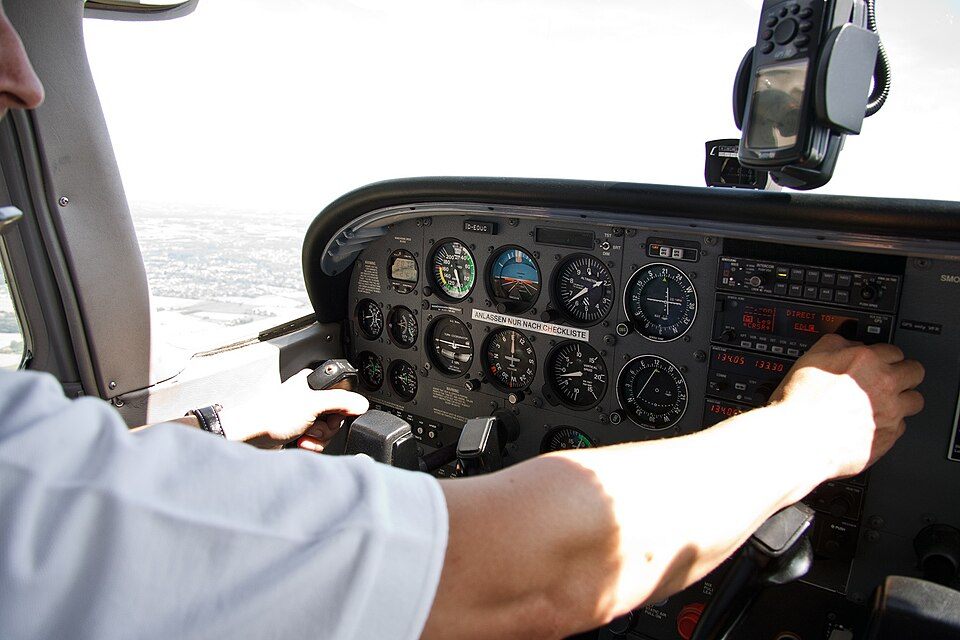
Even airline pilots use flows and checklists every day. Instructors and examiners often judge your checklist use as the first sign of your ability. If one habit will help your flying most, it's checklists.
Observe lessons whenever you can
This is one of the most important tips on this list. Watching other students' ground or flight lessons will help you progress way faster, for two reasons:
- No pressure. You see how a lesson works without having to fly, talk on the radio, and run checklists at the same time.
- It's free! Instruction isn't cheap, so learn on someone else's dime. Just remember it's their lesson, so don't interrupt unless asked.
Ask for extra availability
Independent instructors and Part 61 schools usually have you schedule your own lessons. Larger Part 141 schools often assign a set schedule (for example, Tuesday and Thursday, 2:30 to 5:00).
If you're self-scheduling (recommended for your private license), it's on you to keep things moving. Schedule lessons more than a week ahead. Busy instructors fill up fast, and weather cancellations happen, so having flights already booked keeps you ahead.
If you're in a 141 program, try to be at the head of your class. Many 141 schools have long waits for checkrides. If you're scheduled twice a week, work with your instructor to make it three times.
Either way, show motivation on day one. Tell your instructor you want to finish fast and efficiently, and ask them to call you first when they have openings. Long, drawn-out training is your enemy. Fly at least 2 times per week, avoid breaks, and don't forget your ground lessons.
Get ground done fast
Focusing on knowledge first saves both time and money. Most people don't realize how much studying a private pilot license takes. At-home courses (Sporty's, Gold Seal, Sheppard Air, and others) help a lot. Ask your instructor which one they recommend, and see Part 5 for recommendations.
Expect to go over what you learned at home with your instructor. If you're ever unsure what to study, dig deeper in your course, ask your CFI, or read the PHAK cover to cover.
You must pass the written test before your checkride, and it's one of the harder ones because most students start with little background knowledge. Don't put it off.
Stay organized
Take notes in ground lessons, but don't write a novel. Stay engaged and interact with your instructor. If you're writing instead of listening, you won't retain what comes next. It's fine to ask your instructor to pause so you can write a clear note.
You'll collect a lot of digital and paper resources, so find a way to keep them organized. Neat, labeled folders in Google Drive (or similar) work great. If you go on to a commercial license or become a CFI, organized resources will help you a lot.
Chair fly
Chair flying is one of the best ways to improve between lessons, and it's free. Sit at home and mentally walk through checklists, radio calls, maneuvers, and traffic patterns. It builds the same mental pathways you use when actually flying.
A well-known 1995 Harvard study found that people who only imagined practicing piano made real, measurable progress, with brain changes similar to people who physically practiced. Flying works the same way. The more familiar a task is before you get in the airplane, the less overwhelmed you'll feel. Students who chair fly learn faster, feel more confident, and pay for fewer repeat lessons.
If you chair fly, you can save tons of money!
Check weather and weight & balance before every flight
You're training to be a pilot who can safely fly friends and family. A big part of deciding whether it's safe to fly is checking the weather and the airplane's weight and balance before every flight.
A good CFI will check that you've done both, but sometimes they forget. As a future pilot in command, it's your responsibility to show up with your preflight done. Plus, after doing it 100 times, it'll be easy to explain on your checkride.
Know your airplane
Every airplane has a Pilot's Operating Handbook (POH), and it's one of the most important books you'll study. Read it early and come back to it often. Focus on the limitations, the emergency procedures, normal procedures, and the performance charts.
Memorize the V-speeds, know how the fuel, electrical, and engine systems work, and be able to explain what you'd do if something failed. When you understand why the airplane behaves the way it does, everything in the cockpit makes more sense. Your examiner will expect you to know your airplane inside and out.
The checklists, weight and balance sheets, and numbers for each training airplane are on the Resources page.