Getting into flying can feel like jumping into the deep end, and like any hobby there's a certain set of gear you need. Here's what to get. Over time you'll learn what works best for you and upgrade along the way.
- Flight bag: any dedicated backpack works
- Logbook: ForeFlight plus a large paper logbook
- Headset: anywhere from a used David Clark to a Bose A30
- iPad: iPad mini (6th or 7th gen) with cellular/GPS
- Kneeboard: an iPad mount is best
- E6B flight computer: paper is fine
- Plotter: ASA Ultimate Rotating Plotter
Flight bag
Lots of people buy a fancy "flight bag," but you don't need to. Just dedicate a backpack or bag as your full-time flight bag. Keep your headset, medical certificate, license, iPad, and everything else in it so you never forget anything when you go fly.
Logbook
Your logbook is your record of every flight you take. Get those hours! The best setup is keeping both an electronic and a paper logbook. You only really need one, but having both makes it easy to double-check and catch mistakes.
Electronic: ForeFlight
Electronic logbooks make it much easier to find your totals, check your currency, and apply for jobs. Airlines and many other employers ask for your electronic logbook with your application. ForeFlight's logbook is the top pick, since you'll use the ForeFlight app throughout your training anyway. It tracks your hours, currency, endorsements, and qualifications, all in the same place you do your flight planning.
Paper
The standard paper logbook is a tiny 4" x 8". The brand doesn't matter, but getting the larger size is strongly recommended.
Headset
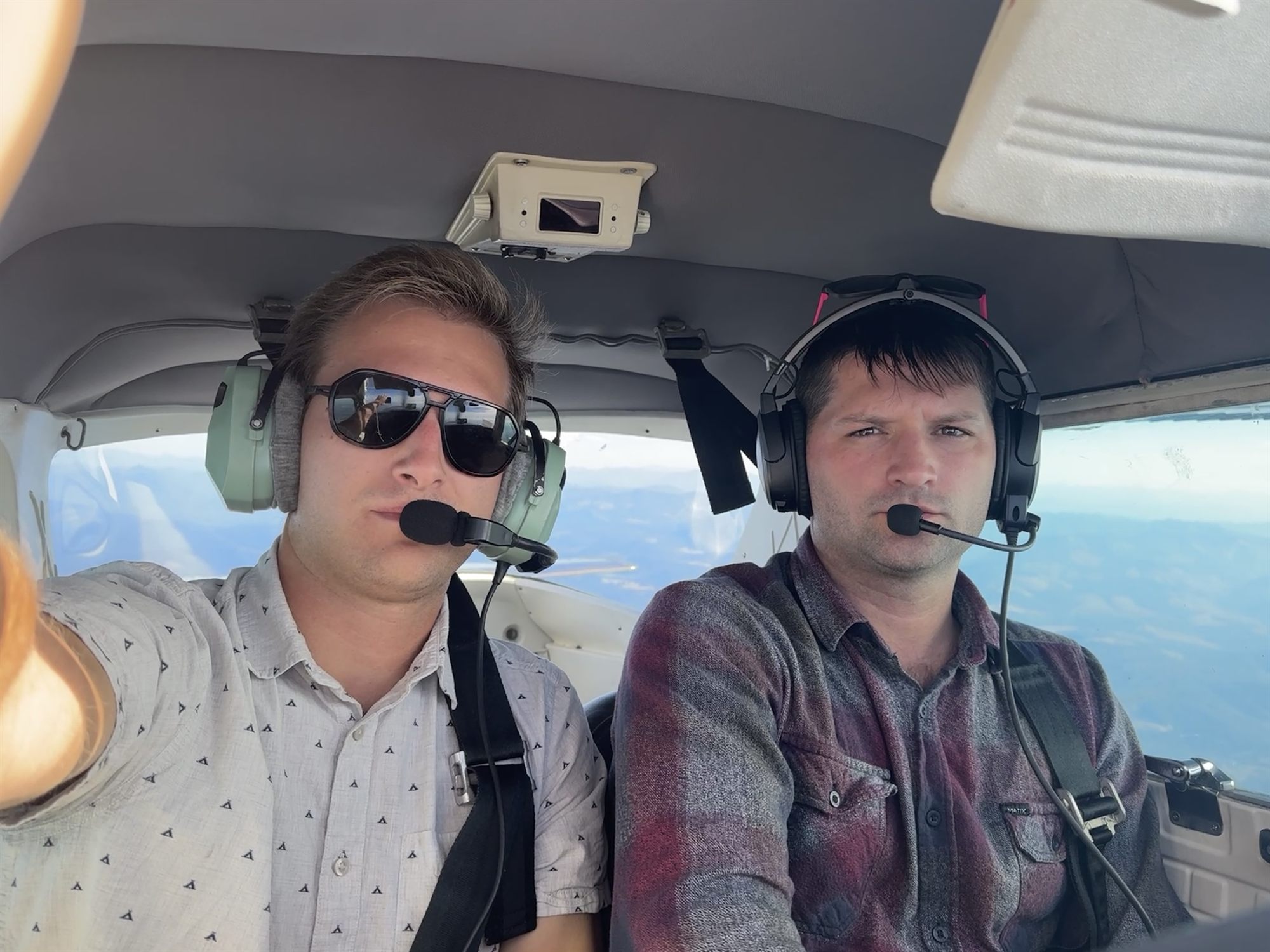
This is the big one! Career pilots are picky about headsets, and you'll often see the Bose A30 or A20. They're the best on the market if you want a lifetime headset. But spending $1,300 at the start of training isn't realistic for most people, and you don't need to. A free pair of 1980s David Clarks from Facebook Marketplace can carry you through an entire training program. Here are the recommendations, from most to least expensive:
- Bose A30 or A20, or Lightspeed Delta Zulu or Zulu 4 ~$1,300
- Any used Bose, Lightspeed, or newer David Clark
- New budget brands: ASA, Pilot USA, Faro, etc.
- Older used David Clark (very durable and usually the cheapest)
Two important things: Stay away from off-brand Amazon headsets. And make sure you get a "GA dual plug" headset, otherwise it won't plug into most training airplanes.
Active vs. passive noise canceling
Active noise canceling headsets measure the noise around you and play sound to cancel it out. They use batteries you'll need to change. Passive headsets are simply thick and heavy enough to muffle outside noise. Either is fine; it's just a matter of comfort.
iPad
You'll use an iPad for many, many things in aviation. Here's what to get:
iPad mini (6th or 7th generation) with cellular/GPS
- Why cellular/GPS? iPads come as WiFi-only or cellular. You don't need to buy a cellular plan, but the cellular model has built-in GPS, which shows your position while flying. That's extremely helpful.
- Why the mini? Full-size iPads are too big for a small cockpit. The mini fits on a knee mount right on your leg.
- Apple Pencil: useful but not required. Writing with a finger while flying is hard, so a pencil makes notes much easier. Off-brand pencils tend to be unreliable, so if you get one, get Apple's.
- Favorite case: the DTTO case for iPad mini 6/7. It has a pencil holder and stands up either way.
Kneeboard
A kneeboard straps to your leg so you can write and read while flying. There are two main types: a basic clipboard, or an iPad mount. You can get by with a clipboard and notepad, but it's worth finding an iPad mount that works for you. You'll use your iPad for navigation, notes, airport information, and more, so keeping it within easy reach is important.
E6B flight computer
An E6B is a flight computer for flight planning math. There are digital and physical versions. A paper one works perfectly well, but an electronic E6B can make flight planning a lot quicker. Either way, you'll be expected to use a physical E6B on your written test and checkride.
- Electronic E6B: fastest and easiest to use ~$100
- Metal E6B: more durable ~$46
- Paper E6B: cheapest, works the same ~$16
Flight plotter
A plotter is a ruler and protractor made for aviation charts. You'll use it with paper sectional charts to plan VFR flights. Some rotate and some don't, but there's really only one worth getting: the ASA Ultimate Rotating Plotter.